
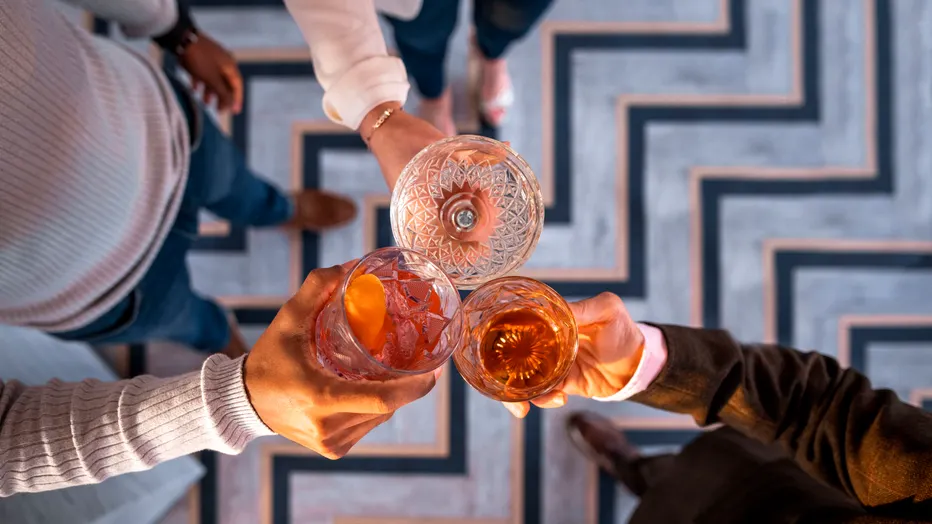
I used to think that giving up alcohol was something people did only if they had a problem. Then I moved to Austin and started noticing something strange. More and more of my friends were ordering mocktails at bars. Happy hour was suddenly about kombucha and sparkling water with bitters. Nobody was making a big deal out of it. It wasn't like they were recovering from anything dramatic. They just weren't drinking. And they weren't apologetic about it either. They were curious about what it felt like to be sober, just for a while, just to see. That's the sober curiosity movement. And I found myself thinking about how it connects to fasting.
The connection isn't obvious at first. Fasting is about food. Sobriety is about alcohol. But both are about the same thing, really. They're about metabolic-analyzer flexibility, mental clarity, and the ability to enjoy life without numbing yourself. When you're fasting, you can't drink. Alcohol breaks your fast, messes with your blood sugar, and makes you feel terrible on an empty stomach. So many people who start fasting naturally become curious about what it's like to go alcohol‑free. And many people who go sober realize that fasting becomes easier because they're not battling those late‑night cravings and hangovers.
I didn't plan it this way. I started fasting first. I noticed that on the nights I had a glass of wine with dinner, my sleep was terrible and my hunger the next morning was out of control. I thought it was just the food. Turns out it was the alcohol. Even a single drink within my eating eating-window-planner made my blood sugar spike and crash, which made fasting the next day much harder. So I quit drinking during fasting days. Then I quit drinking on non‑fasting days too, because I felt better. I wasn't trying to be a teetotaler. I was just following the evidence.
Then I discovered The Unbuzzed Club in Austin. It's an Ayurvedic wellness space on the east side that hosts alcohol‑free events. I went to a "summer cooling" workshop where we drank spiced milk and did breathwork. No one was drinking. No one missed it. The vibe was relaxed but not boring. People were laughing and having deep conversations without the help of alcohol. It felt like a secret club.
The woman who runs it told me that the sober curiosity trend has exploded in Austin because the city is such a wellness hub. People are into hot yoga, cold plunges, sound baths, and clean eating. Alcohol doesn't fit into that picture very well. It dehydrates you, disrupts your sleep, and lowers your metabolic-analyzer rate. When you're trying to optimize your health, alcohol becomes the obvious thing to cut out.
I met a guy there who told me he had been sober for 18 months. He said the first month was hard because he missed the ritual of having a drink. Then he replaced it with kombucha. Now he says kombucha feels like a treat. He also fasts three days a week. He told me that the combination of fasting and sobriety has made his brain feel 10 years younger. I don't know if that's scientifically accurate, but I could see the clarity in his eyes.
The social aspect is the weirdest part. Austin is a drinking city. It's part of the culture. People meet at bars. They celebrate at bars. They mourn at bars. So when you stop drinking, you have to figure out a different social life. That's where sober social clubs come in. The Unbuzzed Club is one example. There are others. Some hold events at Barton Springs. Some do sunset yoga at Zilker Park. It's not about exclusion. It's about creating a space where not drinking is the default.
I've been to a few of these events now. The first one felt uncomfortable. I was used to having a drink in my hand at social gatherings. Without it, I didn't know what to do with my hands. I felt awkward. By the third event, I realized nobody else cared. They were all too busy enjoying themselves. And their enjoyment wasn't dependent on alcohol. That was a revelation.
One unexpected benefit is that I remember everything. Full conversations. The names of people I met. The details of their stories. When I used to drink, I would forget most of that. Now I remember it all. It makes my social life feel richer.
Another benefit is that I don't waste money on alcohol. I used to spend maybe $100 a month on drinks. That's $1,200 a year. That money is now going toward fasting supplies and wellness activities. Not a bad trade.
The sober curiosity movement is also making fasting easier because it's giving me a community. When I'm struggling to stick to my fasting eating-window-planner, I have people I can text. They don't judge me. They just remind me why I'm doing this. That's invaluable.
Austin's hot weather is another factor. Drinking alcohol in 100°F heat is dangerous. It dehydrates you faster. It lowers your awareness of heat stroke. So many Austinites are naturally reducing their alcohol intake just to survive the summer. That's a powerful incentive.
The Unbuzzed Club also hosts events specifically for fasters. They have "break fast" dinners where everyone ends their fast together. It's a potluck style thing with clean, whole foods. You break your fast with like‑minded people while talking about your experience. I went to one and it felt like a support group, but a fun one. People were laughing about their hunger pangs and sharing tips about what foods don't trigger a crash.
I think the fasting community and the sober community are overlapping more and more. Both are about metabolic-analyzer health. Both are about clarity. Both require you to be comfortable with discomfort. And both require you to rethink what you think you need to enjoy your life.
My roommate still drinks occasionally. She doesn't understand why I gave it up. I told her I didn't give it up. I just don't want it anymore. She said that's the same thing. I said no, giving up implies sacrifice. I'm not sacrificing anything. I'm choosing something better.
That's what sober curiosity feels like. Not sacrifice. Curiosity. The curiosity to see what happens when you remove something from your life that you assumed was essential. The curiosity to see if you can still have fun, still connect, still relax. And the answer is yes. You can. And it's actually easier when you're fasting because your body is already in a state of clarity and calm.
Austin is the perfect place for this movement. It's weird, it's health‑conscious, and it's full of people who aren't afraid to experiment. Sobriety and fasting are two experiments that go together naturally. I didn't plan it this way. But I'm glad it happened.
— Maya, East Austin
P.S. I still go to bars sometimes. I order soda water with lime. Nobody notices. And I feel great the next morning while everyone else is nursing hangovers. That's the real benefit.